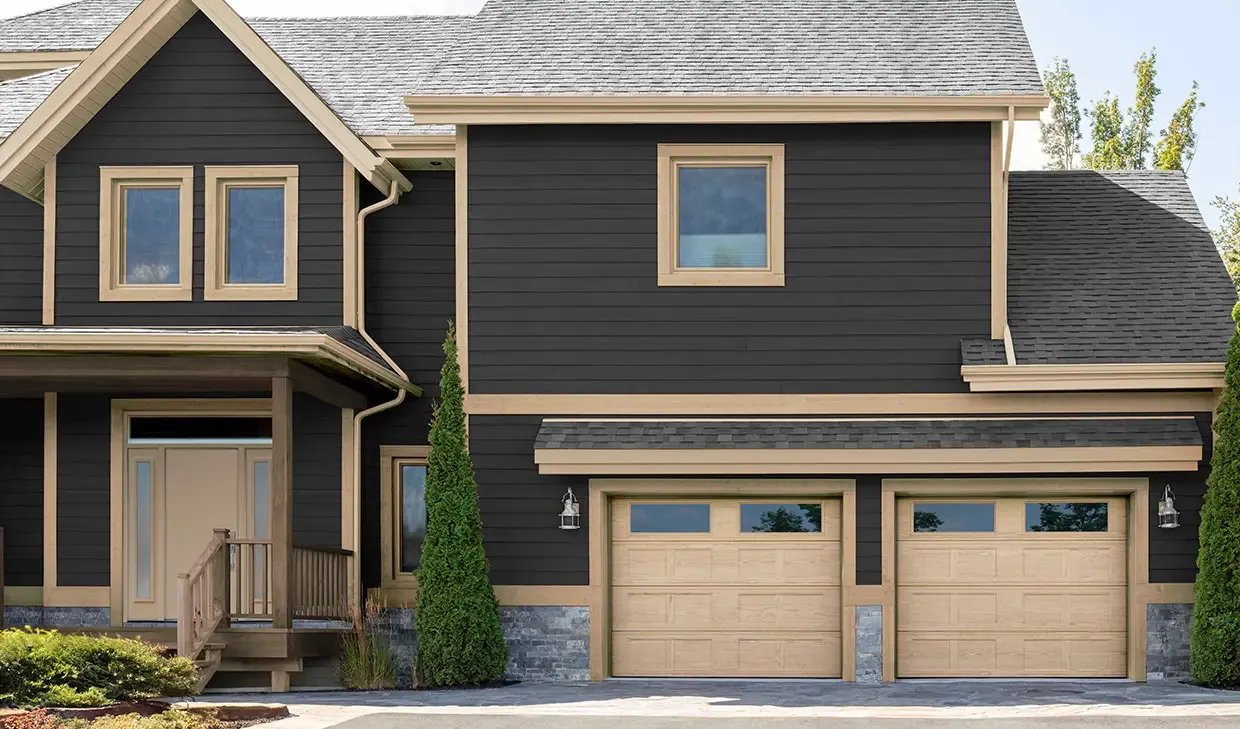
In a Richmond townhouse strata, every unit has its own garage door, its own opener, and its own springs. From the council's perspective, that's 20, 40, sometimes 80 mechanical assets — bolted to the building, visible from the street, and almost always installed at the same time, by the same builder, with the same springs. They all wear out within the same five-year window. They all start failing within the same three-year window.
But who actually pays when one fails?
In BC, that question doesn't have a single answer. The Standard Bylaws under the Strata Property Act make the strata responsible for "any part of the structure of a building that is common property." A garage door is bolted to that structure. Some bylaws explicitly say the strata maintains the door; others explicitly say it's the owner's responsibility. In bare land stratas, the lot is the lot — the whole door is the owner's. In building stratas, the answer depends on where the door sits relative to the mid-point of the exterior wall, the strata plan, and any amendments council registered after the fact.
The Civil Resolution Tribunal has ruled on this both ways. Spiteri v. Strata Plan K664 (2022) and several similar cases turned on a careful reading of the strata plan. Most owners — and most council members — have never read their strata plan.
That's the problem. The decision of who calls and who pays gets made at 8 PM on a Saturday, when a spring just snapped, and nobody has time to call a strata lawyer.
Why this matters for council:
- If 30 owners hire 30 different vendors over five years, you end up with 30 different door colours, 30 different opener brands, 30 different warranties, 30 different service histories. Curb appeal degrades. Resale gets harder.
- If the strata accidentally pays for repairs that should have been owner-paid, the contingency reserve drains for the wrong reasons.
- If the strata doesn't pay for repairs that should have been strata-paid, you end up at the CRT — and lose.
- Most townhome complexes built between 1985 and 2005 are now in the "springs failing" window. The next three years are when this becomes a council issue.