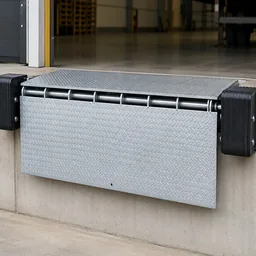
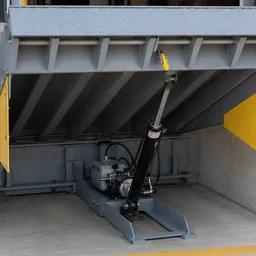
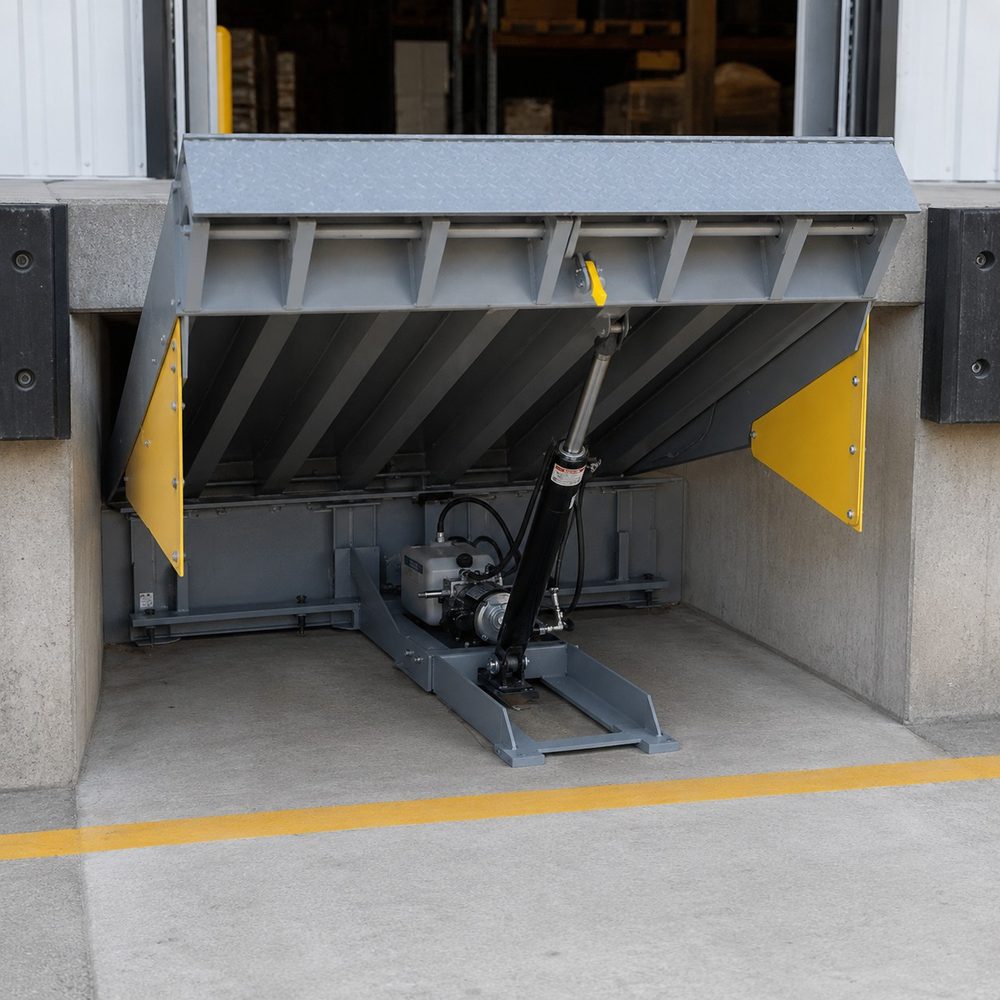
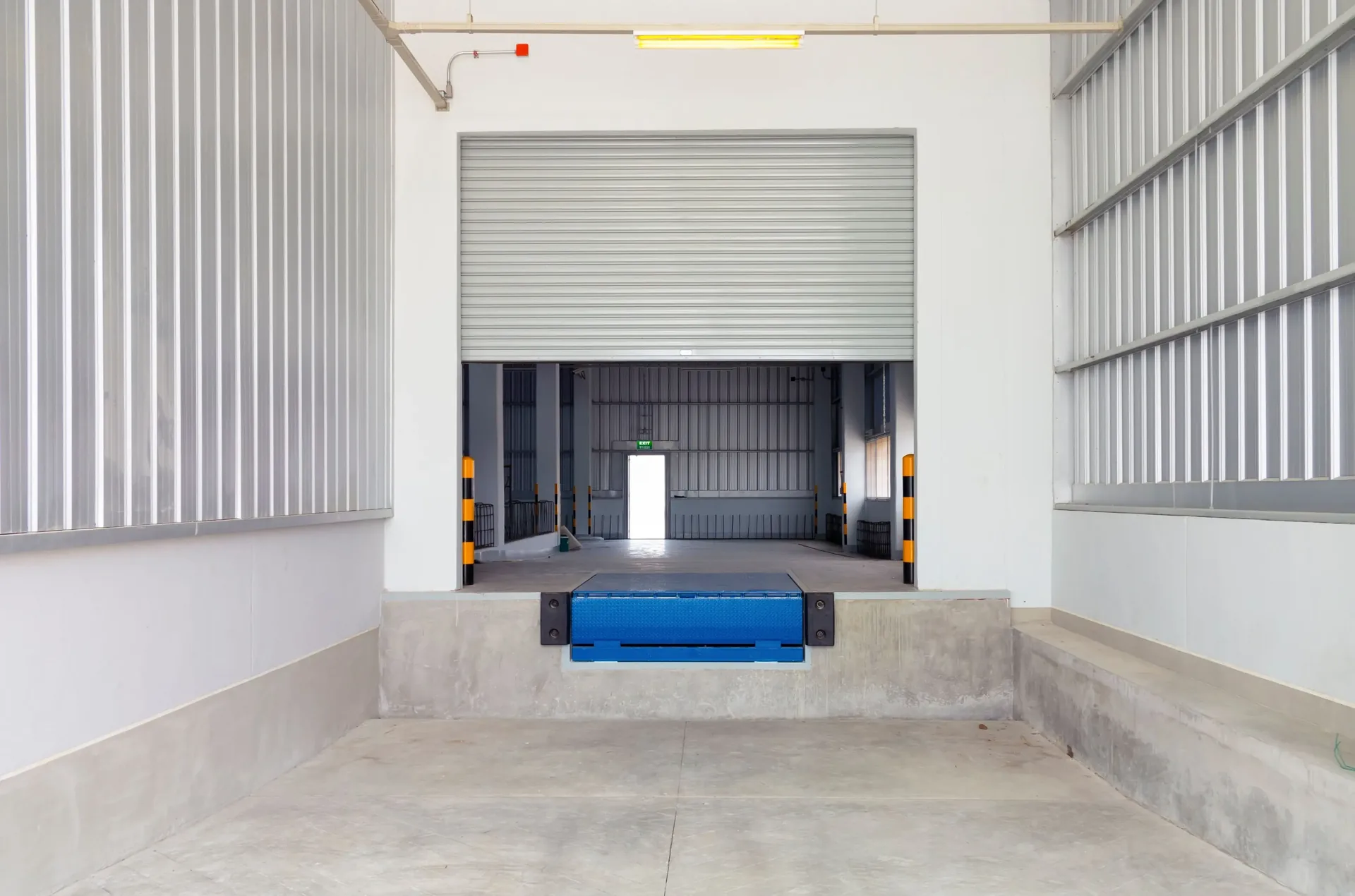
Push-button hydraulic levelers. The industry standard for Richmond high-cycle distribution.
- 35,000–80,000 lb cap
- Velocity fuses (anti-free-fall)
- Auto-return to stored position
- Dialogue safety system
- Optional weather-seal package
- Best lifetime value
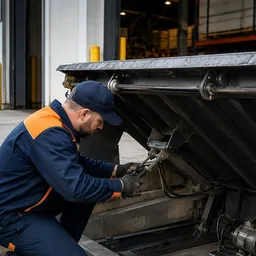
Dock equipment work is bundled into your warehouse maintenance contract — same crew, same visit, same warranty. Standalone callouts also available.
Prices for Richmond locations. Every project gets a written firm quote on-site before any work begins. 2-year labour warranty on all installs.
We carry common wear-item parts on the truck for every major brand: cylinders, springs, lip-hinges, pull-chains, control boards. Specialty parts ordered 3–7 business days.

Push-button hydraulic levelers. The industry standard for Richmond high-cycle distribution.

Canadian-made hydraulic leveler. Common across Richmond facilities that prefer domestic supply chain.

Air-bag-actuated leveler. No hydraulic fluid means no contamination risk — preferred for food-grade Richmond facilities.

Spring-counterbalanced mechanical levelers. Lowest upfront cost; highest 10-year service cost. We service legacy units across Richmond.

Canadian-made hydraulic and edge-of-dock levelers. Engineered in Guelph, Ontario.

Edge-mount levelers for facilities without recessed pits. Lowest-cost option for Richmond retrofits.
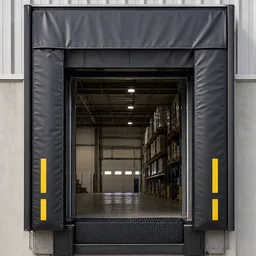
Most seal damage in Richmond is repairable — pad covers, head curtains, and individual foam pads can be replaced as discrete items. Full replacement reserved for frame damage or complete fabric failure.

Tightest compression seal for Richmond cold-storage and temperature-sensitive product. Reduces air infiltration to near-zero.

Inflates after trailer is in position for the tightest possible seal. Best for energy-sensitive Richmond facilities.

Side and head curtains that flex against the trailer. Full trailer-width access — best for mixed-fleet Richmond ops.

Closes the residual air gap at the top of the trailer. Often retrofitted onto existing seals.
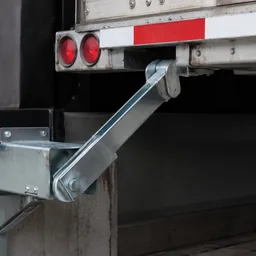
A trailer that pulls away from the dock while a forklift is mid-cycle is the highest-severity injury risk in the warehouse industry. The modern Richmond dock standard is a powered hook restraint with traffic signals.

The most common vehicle restraint on Richmond commercial docks. Engages the trailer's ICC bar automatically.

Canadian-made hook restraint. Common retrofit option on Bridgeport and Mitchell Island warehouses.

Integrated restraint + light + intercom system. The standard for high-volume Richmond 3PL facilities.

Manual wheel chocks. Used as a backup to a primary restraint. Required on every dock without an automated restraint.
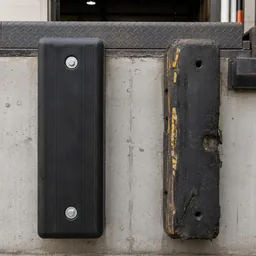
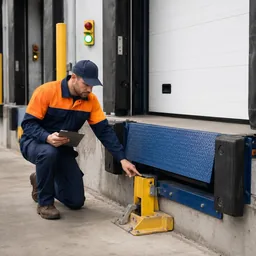
A bumper costs $80–$220 installed. A dock-face concrete repair from a missing bumper costs $4,000–$12,000. Inspect monthly. Replace when compressed below 4" projection or visibly cracked.

The most common bumper across Richmond commercial docks. Replace when compressed to less than 4".

For Richmond facilities with constant heavy impact — cold storage, container terminals, heavy 3PL.

Chemical-resistant solid bumpers for food-grade and wash-down environments. Won't absorb water or oils.

Spring-mounted bumpers that absorb impact across the mounting bracket. Common on heavy-strike Richmond container facilities.
A dock leveler is the steel platform that lowers from the dock face onto the trailer bed, bridging the height gap. There are three core technologies, and the right choice depends on cycle count, load, environment, and budget.
Hydraulic only. Stores vertically against the building so the overhead door can seal directly to the pit floor. Standard in food-grade and cold-storage operations where temperature control is the priority.
The job of a dock seal or shelter is to close the gap between the building wall and the trailer body when a truck is backed in — keeping heat in, dust and rodents out, and product protected.
Add-ons that close residual air gaps at the top corner of the trailer where the dock seal meets the trailer roof line.
We service all major brands — Rite-Hite (Eclipse, Phantom), Kelley (Performer, Frommelt), Blue Giant (SilverStar), and other brand-equivalents. Re-cover, pad replacement, full seal swap-outs, frame repair after forklift damage.
A trailer that pulls away from the dock while a forklift is mid-cycle is the highest-severity injury risk in the warehouse industry. "Trailer creep" — the slow forward walk of a trailer as forklifts repeatedly hit and brake on the dock plate — is the most common cause of dock falls. The OSHA and WCB-equivalent standard is to physically restrain the trailer with a mechanical or hydraulic restraint system.
For trailers without standard ICC bars or for high-throughput operations. Engages the trailer chassis at multiple points.
The wheel chock vs. restraint question gets asked all the time. The answer: a wheel chock relies on the driver remembering to deploy it correctly every cycle. A hook restraint engages automatically when the trailer touches the dock and locks until released. The Industry has shifted decisively to powered restraints for a reason — they're not optional on a modern Richmond dock that handles 30+ trailers a day.
Dock bumpers absorb the impact when a 60,000-lb trailer reverses against the dock face. Without them, repeated impacts crack the concrete dock face, damage the seal, knock the leveler out of alignment, and eventually compromise the wall structure itself. With them, the impact transfers safely to a sacrificial rubber or laminated bumper that's designed to be replaced.
Molded polyethylene bumpers for chemical and wash-down environments
Compressed to less than 4" of original projection
A bumper costs $80–$180 per unit installed. A dock face concrete repair caused by a missing bumper costs $4,000–$12,000. The math is simple.
Every Steveston warehouse maintenance contract can include the full dock package — door plus leveler plus seal plus restraint plus bumpers — on the same scheduled visit. Our 21-point inspection extends across all five systems:
Full WorkSafeBC-compliant written report
Annual — once a year (light-cycle facilities)
Pricing rolls into the warehouse maintenance program — see the Warehouse page for tier rates.
Yes. Every major brand — Rite-Hite, Kelley, Blue Giant, McGuire, Poweramp, Pentalift, Serco, DLM, Nova — uses largely interchangeable replacement parts at the wear-item level (seals, bumpers, hydraulic cylinders, hooks). We carry common parts on the truck and order specialty parts with 3–7 business day lead times.
A leveler that's still structurally sound (deck, hinges, lip) can almost always be repaired even if the power system has failed. We routinely convert mechanical levelers to hydraulic by replacing the power unit while preserving the deck — that saves roughly 60% of replacement cost. A leveler with cracked or warped deck plate, severely worn hinges, or compromised pit anchors is usually beyond economic repair.
There's no single Canadian standard mandating a specific restraint, but WorkSafeBC's Part 14 General Duty Clause requires the employer to prevent vehicle separation during loading/unloading. In practice, that means a hook-style restraint, a vertical-pivot restraint, or — at minimum — a wheel chock with documented procedure. ANSI MH30.3 is the U.S. consensus standard most modern equipment is tested against.
Inspect monthly, replace when the bumper has compressed to less than 4" of projection (for a 6" original), when the steel face is loose or torn, or when visible cracks expose internal laminations. A bumper in active use typically lasts 3–7 years depending on traffic volume.
Most seal damage is repairable. Pad covers can be re-skinned, head curtains can be replaced as a discrete component, and foam pads can be replaced individually. Full seal replacement is usually reserved for frame damage or complete fabric failure. We quote both options every time.
A seal is foam pads (side and head) that the trailer compresses against — tightest seal, lowest air infiltration, but encroaches into the trailer opening. A shelter is fabric or rigid side and head curtains that the trailer slides past — full trailer-width access preserved, more accommodating of varied trailer sizes, but slightly higher air infiltration. Cold storage and food-grade typically use seals. Mixed-fleet operations typically use shelters.
Yes, in partnership with a Richmond concrete contractor on our roster. We'd typically subcontract the pit excavation and pour, then handle the leveler installation and commissioning ourselves.
Stump-out happens when a trailer bed drops below dock level during unloading (as the load comes off the trailer, the suspension rises and the bed can rise 6–8 inches; conversely, when loading, the bed drops). On a mechanical or air-powered leveler with safety legs, those legs can catch on the trailer and force the deck into a severe angle — risking equipment damage and forklift accidents. Hydraulic levelers prevent this with continuous deck-to-bed contact under pressure. Vehicle restraints also help by preventing trailer separation.
Hydraulic pit leveler (35,000 lb capacity, standard 6'×8' deck) installed in an existing pit typically runs $9,500–$15,500 depending on brand, capacity, and lip configuration. Edge-of-dock units run roughly $2,400–$4,800 installed. Vertical-storing units are higher — $15,000–$28,000 installed. Every project is quoted on-site with a written firm price before any work begins.
Yes. Strata warehouse complexes (Bridgeport Central, Marine Landing, Crestwood, similar) often have individual unit-owners responsible for their own dock equipment, with the strata responsible for the building envelope. We work both sides of that split — and we can also coordinate dock maintenance across an entire strata complex if council wants standardized service.
Yes. We provide spec consultation, brand recommendations, capacity calculations, and pit-design coordination for new builds across Richmond's industrial corridors. Send us the architectural set and we'll provide a written equipment specification within 5 business days.
Send us your facility address and a rough dock count. We'll do a free walk-through, inventory every leveler, seal, restraint, and bumper, document brands and condition, and return a written proposal — either for a maintenance contract or for any equipment that needs immediate attention. No on-site sales pitch.