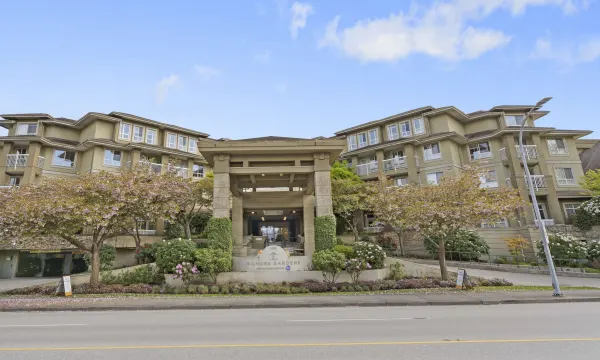
What we see in Gilmore
Gilmore is east Richmond's mixed-use neighbourhood — partly residential, partly agricultural, with some equestrian properties and small acreage farms. The character is different from suburban central Richmond.
Housing breakdown: - 1960s and 1970s ranchers on larger lots (often 1/4 to 1/2 acre): ~35% - 1980s and 1990s family homes, attached or detached garages: ~25% - Acreage / equestrian properties with outbuildings and detached garages: ~15% - 2000s+ infill on subdivided lots: ~15% - Some small commercial / agricultural support buildings: ~10%
Streets like Williams Road, Steveston Highway (the eastern stretch), Sidaway Road, and Finn Road serve a mix of residential and agricultural use.
Garage door reality: - Larger garage doors common (acreage and rural properties often have 12-foot or 16-foot wide single doors for trucks and trailers) - Detached outbuilding garages common (workshops, hay storage, equipment sheds) - Older equipment — some doors from the 1960s and 1970s still in service on rural properties - More 1990s extension-spring systems persisting here than in newer suburban Richmond
Gilmore is inland east Richmond. Salt corrosion is minimal. Humidity is the universal Richmond issue. Rodent population is higher than central Richmond due to the agricultural overlap.
What fails first in Gilmore
Original 1970s and 1980s spring systems on rural detached garages. Often the extension-spring type that's now obsolete from a safety standpoint.
Aging wood door panels. Some older Gilmore garages still have original wood doors that have weathered 40+ years and need replacement.
Rodent damage. Significant in Gilmore due to the agricultural land overlap. Chewed opener wires are a regular service category.
Frame rot on older detached garages with original wood framing.
Cables on rarely-serviced rural doors can accumulate decades of corrosion without inspection.
What we recommend in Gilmore
- Extension-to-torsion conversion on any older extension-spring system. Safety upgrade. $585–$885 for single door, more for larger doors.
- Custom-spec doors for non-standard sizes (12-foot, 14-foot, 16-foot wide commonly needed for truck/trailer access).
- Heavy-duty operators for larger and heavier doors. LiftMaster 8500W jackshaft or commercial-grade options.
- Rodent-proofing as part of every service. Sealing gaps, replacing chewed wiring with conduit-protected runs.
- Frame condition assessment at every visit to detached outbuildings.
What we install in Gilmore
Mix of standard residential and oversize/specialty:
- Spring pair (25K-cycle), standard residential: $385–$625.
- Spring pair for oversize (12-foot+) doors: $585–$985.
- Extension-to-torsion conversion: $585–$885.
- Cable pair, standard: $215–$345.
- Cable pair for oversize doors: $345–$585.
- Roller set, standard: $285–$485.
- Roller set for oversize: $385–$685.
- LiftMaster 8160W installed: $725–$925.
- LiftMaster 8500W jackshaft for high-headroom or heavy doors: $1,295–$1,795.
- LiftMaster MH5011U medium-duty for very heavy or oversize doors: $1,295–$2,285.
- New 12x8 or 14x8 oversize single door, R-12 insulated, installed: $2,985–$4,485.
- New 16x8 oversize single door, R-12 insulated: $3,985–$5,985.
- Standard R-12 insulated single door: $2,195–$2,985.
Response time from the shop
From Moncton Street to Gilmore is 22–30 minutes — east on Steveston Highway, through the central Richmond commercial strip, then continuing east. Traffic on Steveston Highway during peak hours can extend this. Same-day emergency typically 35–75 minutes.
A specific Gilmore story
A horse property owner on Williams Road just east of No. 5 Road, winter 2024. He called about a "weird thing" — the garage door was hanging slightly crooked when fully closed. Maybe 2 cm lower on the left than the right. He'd noticed it Tuesday and called me Friday.
I drove out and looked. Left-side cable was 90% failed — three of seven strands completely separated, two more visibly fraying. The remaining strands were holding the door, but I gave it maybe two more cycles before complete failure.
The door was an older 14-foot-wide double, original to the 1991 build. Springs 8 years old (one previous replacement). Cables original — 33 years old.
I replaced both cables and both springs. The springs being 8 years old made the math obvious — either get me back out in 4 years for cables, or do both now. With the IPPC-90 spring upgrade (his property is exposed to wind off the river): $785 total.
The cost of doing nothing: the cable would have snapped on the next cycle. Door would have come down diagonal. Best case: $625 spring-and-cable emergency repair. Worst case: damaged panels (add $885+) or a hood-deep dent in the new horse trailer he'd just bought.
He thanked me for explaining what I was seeing. Also told me his previous garage door contractor had never once looked at the cables in 20 years of annual maintenance visits.
Gilmore is the kind of neighbourhood where these slow-degradation problems hide because doors get serviced less frequently. Detached garages on acreage properties don't get the same attention as a daily-use attached garage. The annual inspection is even more important here.
A different Gilmore call: a small commercial building on Finn Road, January 2025. Light-industrial 10x10 roll-up door, original 1995, serving a small fabrication shop. Spring at end-of-life, door panels still serviceable. Quoted commercial 50K-cycle spring pair plus full maintenance: $1,185. Customer accepted. The door is now good for another 6–8 years.
The Gilmore mix of residential and light-commercial means I carry parts for both on the truck when I head out there.
Related blog posts
- Cable Replacement: The Quiet Repair That Saves Doors →
/blog/post-12-cable-replacement/ - Roll-Up Doors vs Sectional Doors for Richmond Commercial →
/blog/post-15-rollup-vs-sectional/ - Weather Stripping in a Wet City: Richmond's Hidden Problem →
/blog/post-14-weather-stripping/
Call us
Gilmore service available. Oversize door work a specialty — we carry parts for non-standard widths. Same-day where possible.